
LYNDA LOUIS
PHOTOGRAPHY
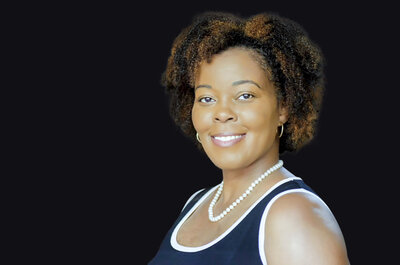



Why Hiring a Professional Headshot Photographer Matters More Than Ever in the Age of AI

There is a question floating around every LinkedIn thread, every HR slack channel, and every conference networking conversation right now: do I really need to hire a professional headshot photographer anymore, or can AI just handle it? It is a fair question. AI headshot tools are everywhere, they are cheap, and some of them produce results that look pretty convincing at first glance. But here is what nobody is telling you and what becomes very obvious the moment you put an AI headshot next to one taken by a skilled professional headshot photographer in Atlanta who actually knows what they are doing. The difference is not subtle. And in a world where your photo is your first impression across every platform you use professionally, that difference has a very real cost.
This is not an anti-technology post. AI is extraordinary and it is changing many things for the better. But your professional reputation is not the place to find out where it falls short. Let’s talk about exactly what you get and what you give up when you choose AI over a real photographer.
The AI Headshot Trend: What Is Actually Happening Right Now
In the last two years, AI headshot generators have exploded. You upload 10 to 20 selfies, pay somewhere between $15 and $50, and within a few hours you receive a set of digitally generated portraits that look… professional-ish. The technology is genuinely impressive from an engineering standpoint. It can smooth skin, add a blazer, swap backgrounds, and produce something that looks like a headshot if you are not looking too closely.
And that last part is the problem. Because the people looking at your headshot the recruiters, the clients, the investors, the hiring managers, the conference organizers they are looking closely. Maybe not consciously. But the human brain is extraordinarily good at detecting something that is slightly off about a face, even when it cannot articulate exactly what that something is. Psychologists call it the uncanny valley. The rest of us just call it the feeling that something about this photo does not quite add up.
What AI Cannot Replicate: No Matter How Good the Technology Gets
1. The Human Connection That Produces Authentic Expression
A great headshot is not about having the right equipment or the right background. It is about what happens in the space between the photographer and the person being photographed. A skilled professional headshot photographer reads the room. Your photographer notices when your shoulders are tense and know how to get them to drop. They tell you the right thing at exactly the right moment to produce a genuine expression instead of a performed one. A professional headshot photographer adjusts their approach based on your personality while pushing some people, slowing down with others, making jokes when needed and going quiet when that works better.
AI cannot do any of that. It takes the face you gave it in a selfie whatever was happening in that moment, whatever tension or self-consciousness you were feeling, whatever the lighting in your bathroom was doing and it generates a polished version of that. The authenticity that makes a great headshot stop people in their tracks? It simply is not there. You cannot manufacture genuine human presence with an algorithm.
2. Accurate Likeness : The Problem Nobody Talks About
Here is something that happens constantly with AI headshots and almost nobody mentions it until it is too late. AI tools trained on massive datasets have well-documented tendencies to generate features that reflect the biases in their training data. This means the generated image may not accurately represent what you actually look like your specific features, your skin tone, your natural hair texture, the specific quality of your eyes. Some people receive AI headshots and do not recognize themselves. Others receive results that look like a slightly different, slightly more generically attractive version of their face.
And then they put that photo on LinkedIn. Which then they show up to a meeting. The person on the other side of the table has a moment brief but wondering if they are talking to the right person. In a relationship business, that moment of doubt is a problem you created for yourself.
3. Lighting That Actually Flatters You Specifically
Professional lighting is not just about making a photo look bright and clean. It is a highly specific craft that considers your unique facial structure, skin tone, and the exact impression you are trying to make. A professional headshot photographer in Atlanta will position their lights to sculpt your face in a way that is specific to you not to the average face in a training dataset. The difference between lighting that flatters and lighting that does not is often the difference between a photo that builds confidence and one that creates doubt. AI works from what you gave it. A great photographer works from what they see.
The Stakes Are Higher Than Most Professionals Realize
Consider everything your headshot is doing for you right now. It is on your LinkedIn profile where over 900 million professionals make first impressions every single day. It is on your company website, your email signature, your speaker bio, your Google Business Profile, your press features, your award nominations, and every platform where your name appears professionally. Every single one of those touchpoints is either building your credibility or creating a quiet, unspoken question mark about it.
LinkedIn’s own research has shown that profiles with professional photos receive dramatically more profile views, connection requests, and messages than those without. The photo is not decorative. It is functional. It is doing the work of a first handshake in every single professional interaction you have online. When that photo is an AI-generated version of you that looks slightly off, slightly artificial, or simply does not look like you you are starting every one of those interactions with a handicap.

What a Professional Headshot Session Actually Gives You That AI Never Will
Direction and Coaching
Being photographed is uncomfortable for most people. That is just the truth. Most professionals are not models. They do not know what to do with their face, their hands, their posture, or their expression when a camera appears. A great professional photographer is also a great coach. They know how to make you look like yourself on your best day not a stiff, over-posed version of yourself that looks like you were told to smile for a school photo.
A Real Session Experience
There is something that happens in a well-run professional headshot session that cannot be replicated by uploading selfies to an app. You arrive, you settle in, you receive direction, you start to relax, and somewhere in that process usually about 15 minutes in when the self-consciousness drops you start to look like yourself. That is the moment great headshot photographers are always working toward. And that moment is only possible when there is a real human being behind the camera creating the conditions for it.
Images That Actually Look Like You
This point cannot be overstated. Your professional headshot should look like you on your best, most intentional day. Not a digitally generated version of you. Not a composite of your features processed through a dataset. You specific, real, and authentic. When someone meets you after seeing your headshot and feels immediate recognition and comfort, that is a professional headshot doing its job. When they feel a moment of confusion or disconnect, that is an AI headshot revealing its limitations at the worst possible time.
Versatile Images for Every Platform and Context
A professional headshot session produces a library of images different crops, different expressions, different framings that you can use across every platform and context. A tight LinkedIn portrait. Your wider speaking bio shot. A more relaxed personal branding image for Instagram. Perhaps a formal executive photo for press features. One well-planned session covers all of it. An AI tool gives you variations of the same generated face, which is a fundamentally different and far more limited thing.
The Cost Comparison That Nobody Is Being Honest About
The argument for AI headshots almost always comes down to price. A professional headshot session costs real money. An AI headshot costs $15 to $50. On the surface that math seems obvious. But let’s think about it differently.
A great professional headshot is a one-time investment that works across every platform you use professionally for two to three years. It appears on LinkedIn, your website, your email signature, your speaking materials, your press features, and every professional interaction you have online during that entire period. When you break that down to a cost per impression per professional relationship that begins with a strong first visual impression the number becomes extremely small.
Now consider the cost of the alternative. The client who chose a competitor because their online presence looked more credible. The speaking opportunity that went to someone whose headshot communicated more authority. The recruiter who moved on because something about your photo created a moment of doubt. You will never know about any of those losses. They will never show up in your analytics. But they are happening, quietly, every day that your headshot is working against you instead of for you.
The real question is never ‘can I afford a professional headshot photographer?’ The real question is ‘can I afford not to have one?’
When AI Headshots Might Make Sense — And When They Absolutely Do Not
When AI Might Be Acceptable
Internal Slack directory where you have never had a photo before and something is better than nothing. A very early stage side project or personal blog where you are not yet ready to invest in professional photography. A temporary placeholder while you schedule your real session. In these very limited, low-stakes contexts, an AI headshot is better than a blank square.
When AI Is Absolutely Not Enough
Your LinkedIn profile which is your most important professional platform and the first place anyone looks you up. Your company website team page. Any speaking, media, or thought leadership context. Executive and leadership roles where authority and credibility are paramount. Job searches, funding pitches, and major business development efforts. Any context where trust is the primary currency and your photo is the first evidence of your credibility. In other words essentially every professional context that actually matters.
What to Look for When Booking a Professional Headshot Photographer in Atlanta
If this post has convinced you that it is time to invest in a real session here is what actually matters when choosing who to book with.
Portfolio consistency across diverse subjects is the first thing to evaluate. Anyone can show you their five best shots. What you want to see is consistent quality across different people, different skin tones, different ages, and different levels of comfort in front of the camera. That consistency tells you whether a photographer has real skill or just occasionally gets lucky.
Direction ability is the second thing. Ask the photographer how they work with clients who are uncomfortable on camera. A vague answer is a red flag. A specific, confident, experience-based answer tells you they have solved this problem many times before and know exactly how to get a genuinely great result from someone who has never felt comfortable being photographed.
Turnaround time, usage rights, and what is included in the session are all practical details worth clarifying upfront. Know exactly what you are paying for and what you will receive before you commit.
At Lynda Louis Photography, we specialize in professional headshots for Atlanta business professionals, executives, entrepreneurs, teams, and corporate events. Every session is directed, relaxed, and specifically designed to produce images you are genuinely proud to put everywhere your name appears. Visit www.lyndalouis.com or email info@lyndalouis.com to book your session.
Share this:

Comments
March 17, 2026